Hey there! As a supplier of high purity goods, I know firsthand how crucial quality assurance is. In this blog, I'm gonna walk you through the quality assurance procedures we follow to make sure our high purity products meet the highest standards.
Raw Material Inspection
The quality journey of our high purity goods starts right at the source - the raw materials. We're super picky when it comes to choosing our suppliers. We only work with those who have a proven track record of providing top - notch materials.
Once the raw materials arrive at our facility, we conduct a thorough inspection. First off, we check the documentation. This includes certificates of analysis, which tell us about the chemical composition, purity levels, and other important specs of the materials. We also look at the packaging. It should be intact and properly labeled to prevent any mix - ups or contamination during transit.
For physical inspections, we use a variety of techniques. For example, we might visually inspect the materials for any visible impurities like dirt, debris, or discoloration. If it's a liquid raw material, we'll check its clarity. For solids, we'll look at the particle size and shape. We also perform some basic tests, like measuring the density or viscosity, depending on the nature of the material. This helps us quickly spot any obvious issues before we even start the production process.
In - Process Monitoring
During the production of high purity goods, we don't just sit back and hope for the best. We have a bunch of in - process monitoring steps in place.
One of the key things we do is continuous sampling. At regular intervals, we take small samples from different points in the production line. These samples are then analyzed using state - of - the - art equipment. For instance, we use gas chromatography for analyzing gaseous products and high - performance liquid chromatography (HPLC) for liquids. These techniques allow us to accurately measure the purity of the product at different stages of production.
We also keep a close eye on the production conditions. Temperature, pressure, and flow rates can all have a big impact on the quality of the final product. We use sensors and monitoring systems to make sure these parameters stay within the specified ranges. If there's any deviation, our system will alert us immediately, and we can take corrective action right away.
Another important aspect of in - process monitoring is the control of the production environment. Our production facilities are designed to be clean and free from contaminants. We have air filtration systems to remove dust and other airborne particles. The floors and walls are made of materials that are easy to clean and disinfect. We also have strict protocols for personnel entering the production area. They have to wear special cleanroom suits, gloves, and masks to prevent any contamination from their clothing or skin.
Final Product Testing
Once the production process is complete, the high purity goods go through a series of final product tests. These tests are more comprehensive and are designed to ensure that the product meets all the required specifications.
We start with purity testing. This is the most critical test, as the whole point of high purity goods is their high level of purity. We use advanced analytical techniques to measure the purity down to very low levels. For example, we can detect trace amounts of impurities in parts per billion (ppb) or even parts per trillion (ppt).
In addition to purity, we also test other properties of the product. If it's a chemical product, we'll test its reactivity, stability, and solubility. For gases, we'll test their flow characteristics and pressure - related properties. We also perform some functional tests to make sure the product works as intended in real - world applications.
We also do a lot of quality control checks on the packaging. The packaging should not only protect the product from damage during shipping and storage but also maintain its purity. We check the integrity of the seals, the quality of the packaging materials, and the accuracy of the labeling. The label should clearly state the product name, purity level, batch number, and any safety instructions.
Traceability and Documentation
Traceability is a big deal in the high purity goods industry. We need to be able to track every step of the production process, from the raw materials to the final product. That's why we have a detailed documentation system in place.
Every batch of raw materials has a unique identifier. We record all the information about the raw materials, including the supplier, the date of receipt, the results of the inspection, and the location where it was stored. During the production process, we record all the production parameters, the time of each step, and the results of the in - process monitoring.
For the final product, we have a batch record that includes all the test results, the production history, and the packaging details. This documentation not only helps us ensure the quality of the product but also allows us to quickly identify and address any issues that may arise. If there's a problem with a particular batch, we can trace it back to the source and take appropriate action.


Equipment Calibration and Maintenance
The accuracy of our testing and production equipment is crucial for quality assurance. That's why we have a strict equipment calibration and maintenance schedule.
We calibrate our equipment regularly using certified standards. This ensures that the measurements we get from the equipment are accurate and reliable. For example, our analytical instruments are calibrated at least once a year, and sometimes more frequently depending on their usage.
We also perform regular maintenance on our equipment. This includes cleaning, lubricating, and replacing worn - out parts. We have a team of trained technicians who are responsible for the maintenance of the equipment. They keep detailed records of all the maintenance activities, including the date, the type of maintenance, and the parts that were replaced.
Quality Assurance for Different High Purity Products
Let's take a look at how these quality assurance procedures apply to some specific high purity products.
High Purity Gases
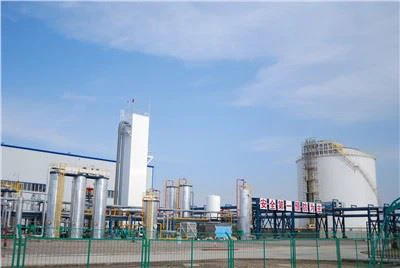
For high purity gases like nitrogen and oxygen, the quality assurance starts with the gas production process. We use advanced Nitrogen Liquefier and Oxygen and Nitrogen Liquefier technology to separate and purify the gases. During the liquefaction process, we monitor the temperature and pressure closely to ensure the purity of the liquefied gas.
Once the gas is liquefied, we transfer it to special storage containers. These containers are designed to prevent any leakage or contamination. Before filling the containers, we clean and purge them to remove any residual impurities. After filling, we perform a series of tests on the gas in the container, including purity testing and moisture content analysis.
High Purity Chemicals
High purity chemicals require a different set of quality assurance procedures. The raw materials for chemical production are carefully selected, and we often use multiple purification steps to remove impurities. During the synthesis process, we control the reaction conditions precisely to ensure the desired chemical structure and purity.
After the synthesis, the chemical is purified further using techniques like distillation, crystallization, or chromatography. We test the purity of the chemical at each purification step. The final product is then packaged in containers that are resistant to chemical corrosion and contamination.
Conclusion
Quality assurance is an ongoing process in the high purity goods industry. At our company, we're committed to providing the highest quality products to our customers. By following these strict quality assurance procedures, we can ensure that our high purity goods meet the most demanding specifications.
If you're in the market for high purity goods and are looking for a reliable supplier, we'd love to hear from you. Whether you need high purity gases or chemicals, we have the expertise and the infrastructure to meet your needs. Contact us to start a conversation about your requirements and let's work together to find the best high purity solutions for your business.
References
- ASTM International Standards for High Purity Materials
- ISO Quality Management System Standards
- Technical Literature from Equipment Manufacturers