Solubility of oxygen in water is a fundamental concept with significant implications across various industries, from environmental science to aquaculture and beyond. As an oxygen supplier, understanding this phenomenon is key to providing the best products and services to our customers.
Understanding Oxygen Solubility
Oxygen solubility refers to the maximum amount of oxygen that can dissolve in water at a given temperature, pressure, and salinity. It's a dynamic property, influenced by multiple factors. At the molecular level, oxygen molecules (O₂) interact with water molecules (H₂O) through weak intermolecular forces. When these forces are balanced, the system reaches a state of equilibrium, and the water is said to be saturated with oxygen.
The solubility of oxygen in water is inversely proportional to temperature. As water temperature rises, the kinetic energy of water molecules increases, making it more difficult for oxygen molecules to remain dissolved. For instance, at 0°C and standard atmospheric pressure, the solubility of oxygen in pure water is approximately 14.6 mg/L. However, at 20°C, this value drops to around 9.2 mg/L. This relationship is crucial in natural water bodies such as lakes and rivers. In summer, when water temperatures are higher, the oxygen solubility decreases, which can lead to oxygen - stressed conditions for aquatic organisms.
Pressure also plays a vital role in oxygen solubility. According to Henry's law, the solubility of a gas in a liquid is directly proportional to the partial pressure of the gas above the liquid. In practical terms, at higher altitudes where the atmospheric pressure is lower, the partial pressure of oxygen is also reduced. As a result, the solubility of oxygen in water is lower compared to sea - level conditions. For example, in mountain streams at high altitudes, the available dissolved oxygen is less, which can limit the types of fish and other aquatic life that can survive there.
Salinity is another factor affecting oxygen solubility. Seawater, which contains a significant amount of dissolved salts, has a lower oxygen solubility than freshwater. The presence of salts in water reduces the space available for oxygen molecules to dissolve. On average, for every 10 parts per thousand (ppt) increase in salinity, the oxygen solubility decreases by about 1%.
Importance in Aquaculture
In the aquaculture industry, understanding oxygen solubility is of utmost importance. Fish and other aquatic organisms require a sufficient supply of dissolved oxygen to survive. At low levels of dissolved oxygen, fish may experience stress, reduced growth rates, and even death. As an oxygen supplier catering to the aquaculture sector, we need to ensure that our customers are aware of how different environmental factors can affect oxygen solubility in their ponds or tanks.
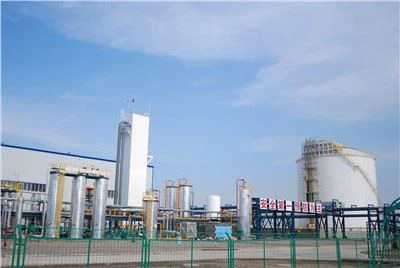
For example, in a large aquaculture farm with multiple fish ponds, the water temperature can vary depending on the location and time of day. By knowing the temperature - solubility relationship, fish farmers can adjust the oxygen supply accordingly. If the water temperature rises during the day, additional oxygen needs to be provided to maintain an adequate dissolved oxygen level for the fish. Our advanced oxygen supply systems can be precisely controlled to meet these changing demands. We offer a range of Small Gaseous Air Separation Plant suitable for small - scale aquaculture operations, as well as Medium Gaseous Air Separation Plant for larger farms.
Role in Environmental Science
In environmental science, the solubility of oxygen in water is a key indicator of water quality. Natural water bodies, such as rivers, lakes, and oceans, rely on dissolved oxygen to support a diverse ecosystem. When pollutants are introduced into these water bodies, they can consume oxygen during the decomposition process, leading to a decrease in dissolved oxygen levels. This phenomenon, known as oxygen depletion, can have severe consequences for aquatic life.
For example, in areas affected by agricultural runoff, high levels of nutrients like nitrogen and phosphorus can cause excessive algal growth. When these algae die and decompose, bacteria consume the available oxygen in the water, creating hypoxic or anoxic conditions. As an oxygen supplier, we can play a role in environmental remediation efforts. Our Gaseous Oxygen Enrichment Air Separation Plant can be used to increase the dissolved oxygen levels in polluted water bodies, helping to restore the ecological balance.
Industrial Applications
Industries such as wastewater treatment also rely on the understanding of oxygen solubility. In activated sludge treatment processes, aerobic bacteria are used to break down organic matter in wastewater. These bacteria require a sufficient supply of oxygen to function effectively. By controlling the oxygen solubility in the treatment tanks, wastewater treatment plants can optimize the treatment process and improve the quality of the treated water.
We provide customized oxygen supply solutions for industrial applications. Our team of experts can analyze the specific requirements of each industrial site, taking into account factors such as water temperature, flow rate, and the type of pollutants in the water. Based on this analysis, we can recommend the most suitable oxygen supply system, whether it's a small - scale unit for a local wastewater treatment facility or a large - scale plant for an industrial complex.
Measuring and Monitoring Oxygen Solubility
Accurately measuring and monitoring oxygen solubility is essential for ensuring the proper functioning of various systems. There are several methods available for measuring dissolved oxygen in water. One common method is the Winkler titration, which involves a series of chemical reactions to determine the amount of dissolved oxygen in a water sample. Another widely used method is the use of dissolved oxygen sensors, which provide real - time measurements.
As an oxygen supplier, we can offer our customers high - quality dissolved oxygen sensors and monitoring equipment. Our sensors are reliable and accurate, allowing for continuous monitoring of oxygen levels in water bodies or industrial processes. We also provide training and support to our customers on how to use these monitoring tools effectively.


Conclusion
In conclusion, the solubility of oxygen in water is a complex yet crucial concept with far - reaching implications. Whether it's in aquaculture, environmental science, or industrial applications, understanding and controlling oxygen solubility is essential for the health and efficiency of various systems. As an oxygen supplier, we are committed to providing our customers with the best products and services based on the latest scientific knowledge.
We invite you to contact us to discuss your specific oxygen requirements. Our team of experts is ready to provide customized solutions for your industry. Whether you need a small - scale oxygen supply system for a hobby aquaculture setup or a large - scale industrial plant, we have the expertise and experience to meet your needs. Let's work together to optimize your oxygen usage and achieve the best results.
References
- Atkins, P. W., & de Paula, J. (2006). Physical Chemistry. Oxford University Press.
- Langmuir, D. (1997). Aqueous Environmental Geochemistry. Prentice Hall.
- Wetzel, R. G. (2001). Limnology: Lake and River Ecosystems. Academic Press.