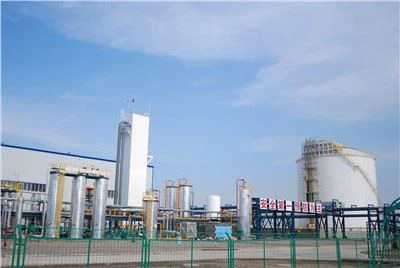
Hey there! I'm a supplier of liquefiers, and I often get asked, "What substances can a liquefier handle?" Well, let me break it down for you in simple terms.
Common Gases Liquefaction
First off, nitrogen is a heavy - hitter in the liquefaction world. A Nitrogen Liquefier can take nitrogen gas and turn it into liquid nitrogen. Nitrogen makes up about 78% of our atmosphere, so it's super abundant. Liquid nitrogen has a wide range of uses. In the food industry, it's used for quick freezing foods to preserve their freshness and texture. In medical facilities, it helps preserve biological samples, like sperm and eggs for fertility treatments. It also has some high - tech applications in cooling electronic components to extremely low temperatures.


Another crucial gas is oxygen. An Oxygen Liquefier does the job of converting oxygen gas into its liquid form. Liquid oxygen has some really important applications. In the aerospace industry, it's used as an oxidizer in rocket engines. Combines with a fuel, it can power rockets into space! In the medical field, liquid oxygen is essential for patients who need a high - concentration oxygen supply over a long period. It can be stored more compactly than oxygen gas, which is a huge plus for patients who may be on the move.
Some liquefiers are designed to handle both oxygen and nitrogen. These Oxygen and Nitrogen Liquefiers are pretty nifty. They can separate air, which is a mixture of nitrogen and oxygen, and then liquefy each gas separately. This is useful in industries where both gases are needed. For example, in a chemical manufacturing plant, nitrogen might be used to create an inert atmosphere to prevent oxidation, while oxygen can be used in combustion processes.
Rare Gases
It's not just nitrogen and oxygen that a liquefier can deal with. There are also rare gases like argon, neon, krypton, and xenon. These gases are present in the atmosphere in very small amounts. Argon liquefaction is quite common. Argon is used in welding processes to create an inert shield around the weld area, preventing oxidation and providing a cleaner weld. A liquefier can turn argon gas into a liquid state, making it easier to store and transport.
Neon is famous for its use in neon signs. But did you know that it's first liquefied before being used in those bright, colorful signs? Liquefying neon makes it possible to control the amount of gas that's released into the glass tubes of the signs. Krypton and xenon are used in specialized lighting applications, like high - intensity discharge lamps. A liquefier can transform these gases into liquids for efficient storage and handling.
Other Substances
Beyond gases, some advanced liquefiers can also handle certain volatile liquids. For example, propane and butane are commonly liquefied. Propane is used in cooking, heating, and as a fuel for vehicles. Liquefying propane allows it to be stored in portable tanks, making it convenient for home use and in RVs. Butane is similar; it's used in lighters and some camping stoves. A liquefier can take the butane gas and convert it into a liquid form, which is much easier to package and use.
How it Works
So, how exactly does a liquefier work its magic? Generally, it uses a process called refrigeration. It cools the gas down to a temperature where it condenses into a liquid. There are different refrigeration cycles, like the Claude cycle, the Linde - Hampson cycle, and the Brayton cycle. Each has its own pros and cons, and the choice of cycle depends on factors like the type of gas being liquefied, the required capacity of the liquefier, and the energy efficiency.
Factors Affecting Liquefaction
There are a few things that can impact how well a liquefier works. The purity of the gas is crucial. If the gas has impurities, they can affect the liquefaction process and the quality of the resulting liquid. For example, if there are water vapor or other contaminants in nitrogen gas, it can cause issues during liquefaction, like ice formation, which can damage the equipment.
The pressure is also important. Different gases have different pressure requirements for liquefaction. By adjusting the pressure, the liquefier can control the state change of the gas. Temperature control is another vital factor. The liquefier must be able to maintain the right temperature to ensure that the gas turns into a liquid and stays in that state.
Why Choose Our Liquefiers
As a liquefier supplier, we've put a lot of effort into designing and manufacturing top - quality liquefiers. Our liquefiers are highly efficient, which means they use less energy to achieve the same amount of liquefaction. We also focus on durability. The components are made from high - quality materials that can withstand the harsh conditions of liquefaction processes.
Our customer service is top - notch. We provide technical support to our clients, helping them choose the right liquefier for their needs. Whether you're running a small medical clinic that needs an oxygen liquefier or a large chemical plant that requires an oxygen and nitrogen liquefier, we can assist you every step of the way.
Contact Us for Procurement
If you're in the market for a liquefier, whether it's for nitrogen, oxygen, or any of the other substances we've talked about, we'd love to hear from you. We can offer you detailed information about our products, including specifications, pricing, and delivery options. Don't hesitate to reach out to us for procurement discussions. We're here to make sure you get the best liquefier for your specific requirements.
References
- Perry, R. H., & Green, D. W. (Eds.). (2008). Perry's Chemical Engineers' Handbook. McGraw - Hill.
- Cengel, Y. A., & Boles, M. A. (2015). Thermodynamics: An Engineering Approach. McGraw - Hill.