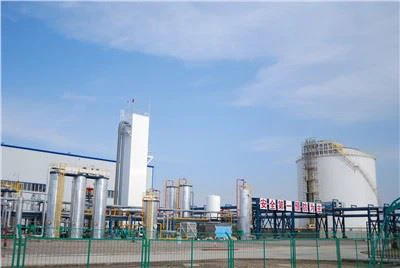
In the global pursuit of cleaner energy sources, Liquefied Natural Gas (LNG) has emerged as a prominent alternative to traditional fossil fuels. As an LNG supplier, I've witnessed firsthand the growing interest in LNG and the ongoing debate about its environmental impact. In this blog post, I'll delve into the question: Does LNG produce less emissions than other fossil fuels?
Understanding LNG and Its Composition
LNG is natural gas that has been cooled to approximately -162°C (-260°F), converting it into a liquid state. This process reduces the volume of the gas by about 600 times, making it easier to store and transport. Natural gas, the primary component of LNG, is mainly composed of methane (CH₄), along with small amounts of other hydrocarbons such as ethane, propane, and butane.
The liquefaction process is a crucial step in the LNG supply chain. It involves several stages of cooling and compression to transform the natural gas into a liquid. For more information on large - scale LNG liquefaction, you can visit Liquid Natural Gas Liquefaction Large Scale LNG Plant.
Emissions from Fossil Fuels: A Comparison
To assess whether LNG produces fewer emissions than other fossil fuels, we need to compare its combustion emissions with those of coal, oil, and diesel.
Carbon Dioxide (CO₂) Emissions
Carbon dioxide is the most well - known greenhouse gas associated with fossil fuel combustion. When burned, fossil fuels release carbon that has been stored underground for millions of years into the atmosphere.
Coal is the most carbon - intensive fossil fuel. When coal is burned for electricity generation or industrial processes, it releases a large amount of CO₂ per unit of energy produced. Oil, which is used in transportation, heating, and various industrial applications, also emits significant amounts of CO₂.
LNG, on the other hand, produces less CO₂ per unit of energy compared to coal and oil. Methane, the main component of LNG, has a higher hydrogen - to - carbon ratio than coal and oil. When methane burns, it combines with oxygen to form CO₂ and water vapor. The chemical reaction is as follows: CH₄ + 2O₂ → CO₂+ 2H₂O. Since there is more hydrogen in methane, less carbon is available to form CO₂, resulting in lower CO₂ emissions per energy unit.
According to the International Energy Agency (IEA), natural gas (LNG) emits about 50 - 60% less CO₂ than coal when used for electricity generation. This makes LNG an attractive option for countries and industries looking to reduce their carbon footprint.
Nitrogen Oxides (NOₓ) Emissions
Nitrogen oxides are pollutants that contribute to the formation of smog, acid rain, and respiratory problems. They are produced when fossil fuels are burned at high temperatures, causing nitrogen and oxygen in the air to react.
LNG generally produces lower NOₓ emissions compared to coal and oil. The combustion of natural gas occurs at a relatively lower temperature than coal combustion, resulting in less NOₓ formation. Additionally, modern LNG engines and power plants are equipped with advanced emission control technologies that can further reduce NOₓ emissions.
Particulate Matter (PM) Emissions
Particulate matter consists of tiny solid or liquid particles suspended in the air. Coal combustion is a major source of PM emissions, especially fine particles (PM₂.₅) that can penetrate deep into the lungs and cause health problems. Oil combustion also generates PM emissions, although to a lesser extent than coal.


LNG combustion produces very low levels of particulate matter. Since natural gas is a relatively clean - burning fuel, there are fewer impurities and less solid residue left after combustion. This makes LNG a better option for improving air quality, especially in urban areas.
Methane Leakage: A Concern for LNG
While LNG has lower combustion emissions compared to other fossil fuels, methane leakage throughout the LNG supply chain is a significant concern. Methane is a potent greenhouse gas, with a global warming potential (GWP) that is about 28 - 36 times higher than CO₂ over a 100 - year time horizon.
Methane can leak during the extraction, production, transportation, and storage of natural gas. In the LNG supply chain, potential sources of methane leakage include wellheads, pipelines, liquefaction plants, and storage facilities. However, the industry has been taking steps to reduce methane leakage. For example, new technologies are being developed to detect and repair leaks more quickly, and stricter regulations are being implemented to limit methane emissions.
Some studies suggest that if methane leakage is kept below a certain threshold (around 3%), LNG still has a lower overall greenhouse gas footprint than coal and oil. It is crucial for LNG suppliers and the entire industry to continue to invest in technologies and practices that minimize methane leakage.
Mini - Scale LNG Plants: An Emerging Solution
In addition to large - scale LNG projects, mini - scale LNG plants are becoming increasingly popular. These plants are designed to produce smaller quantities of LNG, making them suitable for remote areas or smaller - scale applications.
Mini - scale LNG plants offer several advantages. They can provide a reliable source of energy to areas that are not connected to the main gas grid. They also have a smaller environmental footprint compared to large - scale plants. For more information on mini - scale LNG plants and natural gas liquefaction, you can visit Mini Scale LNG Plant/natural Gas Liquefication.
Another related product is the 200L Fully Auto Compact Liquid Nitrogen Liquefier, which plays an important role in the liquefaction process and can be used in conjunction with mini - scale LNG plants.
Conclusion and Call to Action
In conclusion, LNG generally produces less emissions than other fossil fuels such as coal and oil. It has lower CO₂, NOₓ, and PM emissions during combustion, which makes it a cleaner option for energy production and transportation. However, methane leakage is a significant challenge that needs to be addressed to fully realize the environmental benefits of LNG.
As an LNG supplier, we are committed to providing high - quality LNG while minimizing our environmental impact. We invest in the latest technologies to reduce methane leakage and improve the efficiency of our operations.
If you are interested in learning more about our LNG products or are considering switching to LNG for your energy needs, we encourage you to contact us for a procurement discussion. We can provide you with detailed information about our products, pricing, and delivery options. Together, we can take a step towards a cleaner and more sustainable energy future.
References
- International Energy Agency (IEA). (2023). World Energy Outlook.
- Environmental Protection Agency (EPA). (2023). Greenhouse Gas Emissions from the Energy Sector.
- Intergovernmental Panel on Climate Change (IPCC). (2021). Sixth Assessment Report: Climate Change 2021: The Physical Science Basis.