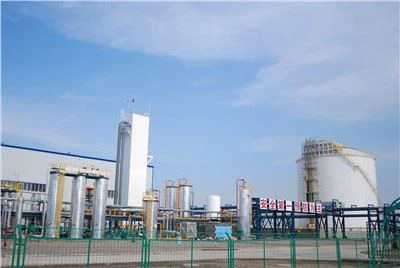
Natural gas has long been recognized as a clean and efficient energy source, and its liquefied form, Liquefied Natural Gas (LNG), has emerged as a key player in the global energy market. As an LNG supplier, I'm often asked about the process of turning natural gas into LNG. In this blog, I'll take you through this fascinating journey, from the raw natural gas extraction to the final, transport - ready LNG product.
Raw Natural Gas Extraction and Initial Treatment
The first step in the LNG process begins with the extraction of natural gas from underground reservoirs. This is typically done through drilling wells, either on land or offshore. The natural gas that is extracted is not in a pure state; it contains a variety of impurities such as water, carbon dioxide (CO₂), sulfur compounds, and heavy hydrocarbons.


Before the natural gas can be liquefied, these impurities must be removed. Water is removed to prevent ice formation during the liquefaction process, which could damage equipment. Carbon dioxide and sulfur compounds are removed because they can freeze at low temperatures and cause blockages in the pipelines and equipment. Also, sulfur compounds are pollutants, and their removal is essential for environmental and regulatory compliance.
The initial treatment involves a series of separation and purification processes. For example, water can be removed using glycol dehydration units, where the natural gas is passed through a solution of glycol, which absorbs the water. To remove sulfur compounds and carbon dioxide, processes like amine treating are commonly used. In an amine treating unit, the natural gas is contacted with an amine solution, which reacts with the acid gases (CO₂ and H₂S) and removes them from the gas stream.
Compression and Pre - cooling
After the natural gas has been purified, it is ready for the next major steps in the liquefaction process. The first of these steps is compression. The natural gas is compressed to increase its pressure. Compression serves several purposes. Firstly, it increases the density of the gas, making it easier to handle and transport through the subsequent stages of the process. Secondly, it raises the temperature of the gas due to the work done on it during compression.
Once the natural gas is compressed, it is pre - cooled. Pre - cooling is a crucial step as it reduces the energy required for the final liquefaction. The natural gas is typically cooled using a refrigerant, such as propane or a mixture of hydrocarbons. The refrigerant absorbs the heat from the natural gas, causing the temperature of the gas to decrease. As the temperature drops, the gas approaches a state where it can be more easily liquefied. This pre - cooling process also helps to remove any remaining heavy hydrocarbons that might solidify during the final liquefaction stage.
Main Liquefaction Process
The main liquefaction process is where the magic happens, and the natural gas is transformed into LNG. There are several different liquefaction technologies available, but the most common ones are based on the use of refrigeration cycles. One of the widely used methods is the cascade refrigeration cycle.
In a cascade refrigeration cycle, multiple refrigerants are used in a series of stages, each with a different boiling point. The first stage typically uses a high - boiling - point refrigerant, such as propane, to pre - cool the natural gas to an intermediate temperature. The second stage uses a medium - boiling - point refrigerant, like ethane, to further cool the gas. Finally, a low - boiling - point refrigerant, such as methane, is used to bring the natural gas down to its liquefaction temperature of around - 162°C (- 260°F).
As the natural gas is cooled to this extremely low temperature, it undergoes a phase change from a gas to a liquid. The volume of the gas decreases significantly during this process; LNG takes up about 1/600th of the volume of natural gas in its gaseous state. This reduction in volume makes it much more economical to store and transport LNG over long distances.
Storage and Transportation
Once the natural gas has been successfully liquefied into LNG, it is stored in specialized cryogenic storage tanks. These tanks are designed to maintain the LNG at its low temperature and prevent it from boiling off. They are typically double - walled, with an insulating material in between the walls to minimize heat transfer from the outside environment.
When it comes to transportation, LNG is usually shipped in specially designed LNG carriers. These are large ships that are equipped with cryogenic storage tanks to keep the LNG cold during transit. The LNG carriers are also designed with safety features to prevent any potential leaks or spills. For domestic or regional distribution, LNG can also be transported by trucks or trains, using similar cryogenic storage containers.
Advanced Technologies and Equipment in LNG Liquefaction
In recent years, there have been significant advancements in LNG liquefaction technologies and equipment. These improvements have led to more efficient and cost - effective liquefaction processes. For example, some modern liquefaction plants use mixed refrigerant cycles, which can achieve higher energy efficiency compared to the traditional cascade refrigeration cycles.
The equipment used in the LNG liquefaction process also plays a crucial role. This includes heat exchangers, compressors, expansion valves, and storage tanks. High - quality equipment is essential for the smooth operation of the liquefaction plant and for ensuring the safety and reliability of the process. You can find more information about LNG Liquefied Natural Gas Equipment on our website.
There are also different scales of LNG liquefaction plants available. Large - scale LNG plants are capable of producing huge volumes of LNG and are often located close to major natural gas fields. For more details on Liquid Natural Gas Liquefaction Large Scale LNG Plant, you can visit the provided link. On the other hand, small - scale LNG plants are more flexible and can be used in areas where there is a smaller demand for LNG or where it is not feasible to build a large - scale plant. You can learn more about Small Scale Lng Snam by clicking the link.
Quality Control and Safety in LNG Production
Quality control is of utmost importance in the production of LNG. The LNG must meet strict specifications in terms of its composition, temperature, and other properties. Regular testing is conducted throughout the production process to ensure that the LNG meets these standards. This includes analyzing the composition of the natural gas before and after treatment, monitoring the temperature and pressure during the liquefaction process, and testing the LNG in the storage tanks.
Safety is also a top priority in LNG production. The extremely low temperatures and high pressures involved in the liquefaction process pose significant risks. Therefore, strict safety protocols are in place at every stage of the process. This includes using safety - critical equipment, providing appropriate training for the workers, and having emergency response plans in case of any accidents or leaks.
Contact for LNG Procurement
If you are in the market for high - quality LNG, we are here to help. Our company is a leading LNG supplier with a proven track record of providing reliable and efficient LNG solutions. We have the expertise and infrastructure to meet your LNG needs, whether you require a small - scale or large - scale supply.
We understand the importance of a seamless procurement process and are dedicated to providing excellent customer service. If you are interested in discussing your LNG requirements, please reach out to us. We look forward to the opportunity to work with you and to help you meet your energy needs.
References
- Speight, J. G. (2019). The Chemistry and Technology of Natural Gas. CRC Press.
- Kidnay, A. J., Parrish, W. R. (2006). Fundamentals of Natural Gas Processing. CRC Press.