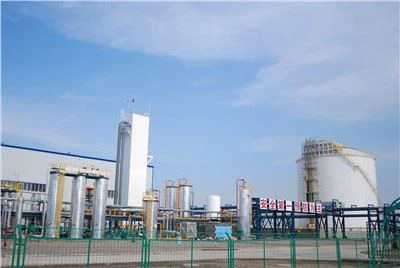
As a seasoned supplier of Nitrogen Plants, I often encounter inquiries regarding the working humidity range of these essential industrial machines. Understanding the optimal operating conditions, including humidity, is crucial for ensuring the efficiency, reliability, and longevity of a Nitrogen Plant. In this blog post, I'll delve into the significance of working humidity, the specific ranges suitable for different types of Nitrogen Plants, and share our expertise as a leading supplier in this field.
The Role of Humidity in Nitrogen Plant Operation
Humidity, defined as the amount of water vapor present in the air, can significantly impact the performance of a Nitrogen Plant. The presence of excess moisture can lead to several operational issues. For instance, water vapor in the feed air can cause corrosion within the plant's components, such as pipes, valves, and separation units. This corrosion not only shortens the lifespan of the equipment but can also contaminate the produced nitrogen, reducing its purity.
Moreover, high humidity levels can affect the efficiency of the separation process. In most Nitrogen Plants, the separation of nitrogen from other gases relies on various physical and chemical processes. Water vapor can interfere with these processes, leading to reduced nitrogen production rates and increased energy consumption. On the other hand, extremely low humidity can also pose challenges, such as static electricity buildup, which may damage sensitive electronic components in the plant.
Working Humidity Ranges for Different Types of Nitrogen Plants
Cryogenic Air Separation Units
Cryogenic air separation units (ASUs) are large-scale industrial plants used to produce high-purity nitrogen, oxygen, and other gases by liquefying air and separating its components at extremely low temperatures. These plants typically have a relatively wide working humidity range. Generally, they can operate efficiently in environments with a relative humidity (RH) ranging from 10% to 80%.
The cryogenic process involves cooling the air to very low temperatures, which causes the water vapor in the air to condense and freeze out. However, if the humidity is too high, the excess water can overwhelm the pre-treatment systems designed to remove moisture, leading to ice formation in the cold sections of the plant. This ice can block pipes and disrupt the flow of air, reducing the plant's efficiency and potentially causing damage.
Conversely, very low humidity levels are generally less of a concern for cryogenic ASUs, as the pre-treatment systems can easily handle the small amount of moisture present in the air. However, in extremely dry environments, precautions may still be needed to prevent static electricity buildup.
Pressure Swing Adsorption (PSA) Nitrogen Gas Generators
PSA Nitrogen Gas Generators are widely used in various industries for on-site nitrogen generation. These generators operate by selectively adsorbing oxygen and other impurities from the feed air using adsorbent materials, leaving behind nitrogen. The working humidity range for PSA Nitrogen Gas Generators is typically more restricted compared to cryogenic ASUs.
A suitable relative humidity range for PSA Nitrogen Gas Generators is usually between 20% and 70%. High humidity levels can saturate the adsorbent materials, reducing their ability to adsorb oxygen effectively. This can lead to a decrease in nitrogen purity and production capacity. Additionally, excess moisture can cause the adsorbent materials to clump together, further impairing the performance of the generator.
On the other hand, very low humidity levels can cause the adsorbent materials to dry out and become brittle, potentially leading to mechanical damage and a reduction in their adsorption capacity. Therefore, maintaining the humidity within the recommended range is essential for the optimal operation of PSA Nitrogen Gas Generators.
Our Expertise as a Nitrogen Plant Supplier
As a trusted supplier of Nitrogen Plants, we understand the importance of providing equipment that can operate effectively in a wide range of environmental conditions. Our High Purity Nitrogen Air Separation Equipment and Psa Nitrogen Gas Generator are designed and engineered to meet the highest quality and performance standards.
We offer comprehensive pre-sales and after-sales support to ensure that our customers get the most out of their Nitrogen Plants. Our team of experienced engineers and technicians can provide customized solutions based on the specific requirements and environmental conditions of each customer. We also offer regular maintenance and inspection services to keep the plants operating at peak efficiency and minimize downtime.


In addition to our nitrogen generation equipment, we also supply High Purity PSA Oxygen Generator for various industrial applications. Our oxygen generators are designed to produce high-purity oxygen with minimal energy consumption, making them an ideal choice for industries such as healthcare, metal fabrication, and chemical processing.
Conclusion
The working humidity range is a critical factor in the operation of a Nitrogen Plant. Understanding the specific humidity requirements for different types of Nitrogen Plants, such as cryogenic ASUs and PSA Nitrogen Gas Generators, is essential for ensuring their optimal performance and longevity. As a leading supplier of Nitrogen Plants, we have the expertise and experience to provide high-quality equipment and comprehensive support to our customers.
If you are considering purchasing a Nitrogen Plant or need more information about our products and services, please feel free to contact us. We look forward to discussing your specific requirements and providing you with a customized solution that meets your needs.
References
- Perry, R. H., & Green, D. W. (Eds.). (2007). Perry's Chemical Engineers' Handbook. McGraw-Hill.
- Kohl, A. L., & Nielsen, R. B. (1997). Gas Purification. Gulf Publishing Company.
- Yang, R. T. (1987). Gas Separation by Adsorption Processes. Butterworths.