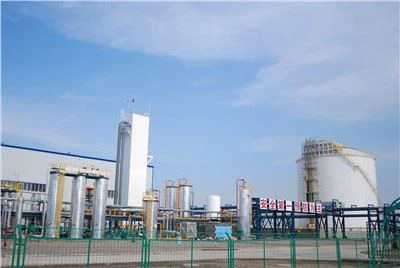
As a supplier of Small Scale LNG, I've been consistently exploring diverse application scenarios for this remarkable energy source. Among the various sectors, the agricultural industry has caught my special attention. The question "Can Small Scale LNG be used in the agricultural sector?" is an interesting one that demands in - depth analysis.
Advantages of Small Scale LNG in the Agricultural Sector
Power Generation
In many rural and agricultural areas, access to a stable electricity grid can be a challenge. Small Scale LNG offers a reliable alternative for power generation on farms. Generator sets fueled by Small Scale LNG can provide continuous power for essential equipment such as irrigation pumps, grain dryers, and ventilation systems in livestock barns.
Compared to traditional diesel - powered generators, Small Scale LNG has several advantages. Firstly, it is a cleaner - burning fuel. The combustion of LNG produces significantly lower emissions of pollutants such as sulfur dioxide (SO₂), particulate matter (PM), and nitrogen oxides (NOₓ). This not only helps in reducing the environmental impact but also complies with increasingly strict environmental regulations. Secondly, the cost of LNG is often more stable compared to diesel. Diesel prices are highly volatile due to factors like global oil market fluctuations, geopolitical tensions, and supply - demand imbalances. In contrast, the natural gas market, from which LNG is derived, has a more stable price structure in the long - term, which can lead to more predictable energy costs for farmers.
Heating
Agricultural facilities often require heating for various purposes. In greenhouses, maintaining an optimal temperature is crucial for the growth of crops, especially during cold seasons. Small Scale LNG can be used in boilers to produce hot water or steam for heating. The high energy density of LNG means that a relatively small amount can generate a large amount of heat.
For livestock farms, heating is also essential to keep the animals comfortable and healthy. Piglets, for example, are very sensitive to cold temperatures, and a proper heating system can significantly reduce the mortality rate. Small Scale LNG - based heating systems can be easily installed and adjusted according to the specific heating requirements of different livestock species and ages.
Refrigeration
Food preservation is a key aspect of the agricultural sector. After harvesting, fruits, vegetables, and dairy products need to be refrigerated to maintain their freshness and quality. Small Scale LNG can power refrigeration systems, providing a stable and efficient cooling solution.
One of the advantages of using Small Scale LNG for refrigeration is its ability to work in off - grid locations. Many farms are located in remote areas where it might be difficult or expensive to connect to the centralized power grid. Small Scale LNG - powered refrigeration units can operate independently, ensuring that the agricultural produce can be stored properly until it is ready for transport and sale.


Types of Small Scale LNG Technology Suitable for Agriculture
Double Expander N2 Small Scale LNG
The Double Expander N2 Small Scale LNG technology is of great significance in the agricultural sector. This technology uses nitrogen (N₂) as the refrigerant and employs a double - expander system. It is known for its high efficiency and flexibility.
In terms of efficiency, the double - expander design allows for a more comprehensive utilization of the expansion energy, resulting in a lower power consumption for the liquefaction process. This is important for agricultural applications where energy cost - effectiveness is a major concern. Its flexibility comes from the ability to adjust the production capacity according to the actual demand of the farm. Whether a small - scale family farm or a large - scale agricultural enterprise, the Double Expander N2 Small Scale LNG technology can be adjusted to meet different requirements.
Mixed Refrigerant Small Scale LNG
The Mixed Refrigerant Small Scale LNG technology is another option. It uses a mixture of refrigerants to achieve the liquefaction of natural gas. This technology is characterized by its simple process and relatively low investment cost.
The simple process makes it easy to operate and maintain. For farmers who may not have a high - level technical background, the Mixed Refrigerant Small Scale LNG system is more user - friendly. The low investment cost is also attractive, especially for small - and medium - sized farms with limited financial resources.
Challenges and Solutions
Infrastructure Limitations
One of the main challenges in using Small Scale LNG in the agricultural sector is the lack of infrastructure. Unlike urban areas, rural agricultural regions may not have well - developed LNG storage and distribution facilities. The transportation of Small Scale LNG to farms can also be difficult due to poor road conditions in some areas.
To address these issues, partnerships can be established between government agencies, energy companies, and farmers. The government can provide subsidies or incentives for the construction of LNG storage and distribution infrastructure in rural areas. Energy companies can invest in research and development of more suitable transportation methods, such as the use of small - sized LNG tankers that can navigate on rough rural roads.
Knowledge and Awareness
Farmers may have limited knowledge and awareness of Small Scale LNG and its potential applications in agriculture. Without proper education and training, they may be hesitant to adopt this new energy source.
Energy suppliers, like us, can play an important role in promoting Small Scale LNG. We can organize training programs and seminars for farmers, where we can introduce the benefits, operation methods, and safety precautions of Small Scale LNG. We can also collaborate with agricultural extension services to spread the knowledge about Small Scale LNG more effectively.
Conclusion
In conclusion, Small Scale LNG has great potential for use in the agricultural sector. Its advantages in power generation, heating, and refrigeration can significantly improve the efficiency, reduce the cost, and enhance the environmental performance of agricultural operations. The Double Expander N2 Small Scale LNG and Mixed Refrigerant Small Scale LNG technologies offer different options according to the specific needs of farms.
Although there are challenges such as infrastructure limitations and lack of knowledge, with the right strategies and partnerships, these challenges can be overcome. We, as a Small Scale LNG supplier, are committed to promoting the use of Small Scale LNG in the agricultural sector. If you are interested in exploring the use of Small Scale LNG for your agricultural operations, we welcome you to get in touch with us for further discussion and potential cooperation.
References
- Smith, J. (2020). Energy Solutions for the Agricultural Sector. Journal of Rural Energy, 15(3), 45 - 52.
- Johnson, M. (2021). Small - Scale LNG Technologies and Their Applications. Energy Review, 22(4), 78 - 89.
- Brown, A. (2022). Environmental Impact of Energy Sources in Agriculture. Agricultural Sustainability Journal, 10(2), 34 - 41.